126, Mange Ram Park, Rohini, Delhi, India


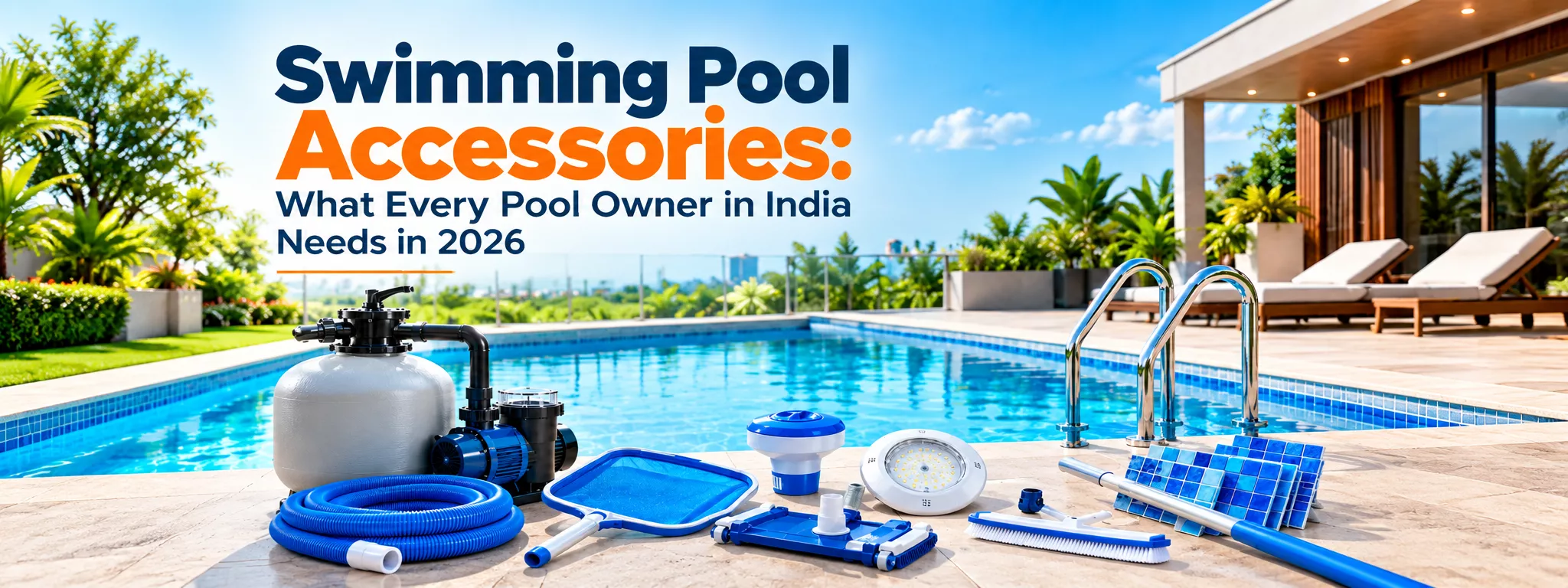
Swimming pool accessories are the tools, chemicals, safety items and add-ons that keep pool water clean, make entry and exit safe, and make swimming more enjoyable. Every pool needs four groups: cleaning tools, water testing and sanitizers, safety gear, and comfort items. Toys and fountains come after those basics.
In India, heat, dust and heavy use turn clear water green quickly when the basics are missing. This guide sorts swimming pool accessories by job, explains what each one does, and ends with a plain list you can copy.
What Counts as a Swimming Pool Accessory?
An accessory is any product you use with a pool but that is not part of its structure. The shell, tiles and main plumbing are not accessories. Nets, brushes, test kits, chemicals, ladders and floats are.
A filter pump is technically equipment. Cartridges, hoses and spare parts are bought and replaced separately. Buyers usually shop for both together, so this guide covers both.
Also Read - Top-Rated Swimming Pool Lights Under ₹1,000 With Energy-Saving Features
Cleaning and Maintenance Accessories
Cleaning tools do the daily and weekly work. Without them, debris sinks, breaks down and feeds algae.
Filter pump and cartridges. The pump pushes water through a filter that traps dirt, hair and fine debris. Cartridge filters use a replaceable element. Rinse the cartridge when water flow drops, and replace it when rinsing no longer restores flow. Match the pump to your pool’s water volume, not to the lowest price. For larger pools, see our swimming pool filter page.
Skimmer net and telescopic pole. A mesh net on an adjustable pole lifts leaves, insects and dust off the surface. Use it daily, before debris sinks. The same pole also takes brushes and vacuum heads, so one pole serves three tools.
Vacuum kit. A vacuum head with a hose clears dirt from the pool floor. Manual heads connect to the pump or skimmer line and are moved by hand. Larger pools often use automatic cleaners instead.
Wall brush. Bristles remove algae and slime from walls, steps and corners. Nylon is the safe default for tiles and liners. Brush walls weekly, and more often in peak summer.
Water Testing and Chemical Accessories
Clear water is not always safe water. Bacteria and algae can grow before the water looks cloudy, and testing is the only way to know.
Test kits and strips. Strips give quick pH and chlorine readings. Liquid kits take longer but read more precisely. Safe pool water holds a pH between 7.2 and 7.6. Test at least twice a week, and again after heavy use or rain.
Sanitizers. Chlorine tablets or TCCA granules kill bacteria and slow algae growth. Free chlorine is commonly kept at 1 to 3 ppm. Follow the label dose for your pool’s volume. Store chlorine dry and away from sunlight, and never mix two chemicals together.
pH increaser, pH reducer and algaecide. These correct water that drifts out of range. Chlorine works poorly when pH runs high, so fix pH first. Algaecide is a back-up for a bloom, not a substitute for filtration and regular chlorine.
Also Read - How to Choose the Best Pool Accessories for Different Pool Types
Safety Accessories
No accessory replaces an adult watching the water. These items reduce risk and give you a faster response.
Ladders and handrails. Stainless steel ladders with non-slip steps give a stable grip on the way in and out. Fixed handrails suit permanent pools. For above-ground pools, a ladder that locks or folds away stops small children from climbing in alone.
Life buoy and shepherd’s hook. Keep both within reach at the pool edge. A life buoy is thrown to a swimmer in trouble. A shepherd’s hook pulls someone to the side without a rescuer entering the water.
Life jackets. Children and non-swimmers should wear a correctly sized jacket. Check the weight rating and make sure the buckle holds. Inflatable arm bands are a play aid. They are not a life-saving device.
Pool cover. A floating or isothermal cover cuts evaporation, holds heat and keeps leaves out. It also reduces cleaning time. A floating cover is not a safety barrier, and a child or pet can still drown beneath one.
Comfort and Fun Accessories
Once the basics are in place, add the items that make the pool pleasant to use.
Pool fountains and aerators. A spray fountain creates a waterfall effect and moves surface water, which slightly cools it. It is a feature item, so buy it after the cleaning and testing gear.
Floats and tubes. Swim rings, water hammocks and tube floats suit relaxing. Pool noodles work for both play and swim practice. Rinse inflatables after use and store them out of direct sun.
Common Mistakes When Buying Pool Accessories
Most buying mistakes come from poor compatibility and weak materials. These four are the most common.
- Mismatched fittings. Pole ends, vacuum heads and hoses come in different sizes. Check they fit your pump and skimmer line.
- Low-grade stainless steel. Chlorinated water corrodes weak steel. Ask for the stainless steel grade before buying ladders and handrails.
- No spares. Cartridges, bumper caps and brush heads wear out first. Buy from a supplier that stocks replacements.
- Buying extras first. Fountains and floats can wait. Buy cleaning, testing and safety items first.
Swimming Pool Accessories List
- Filter pump
- Filter cartridges
- Skimmer net
- Telescopic pole
- Vacuum head
- Vacuum hose
- Vacuum kit
- Wall brush
- Floor brush
- Water test kit
- Test strips
- Chlorine tablets
- TCCA chlorine granules
- pH increaser
- pH reducer
- Algaecide
- Pool cover
- Pool ladder
- Handrail
- Life buoy
- Life jacket
- Shepherd’s hook
- Pool fountain
- Aerator
- Swim ring
- Water hammock
- Tube float
- Pool noodle
Also Read - Why Should You Hire a Professional Swimming Pool Contractor?
Where to Buy Swimming Pool Accessories?
DS Water Technology has worked in swimming pool construction and equipment since 2011 from Rohini, Delhi. Founder Dharmendra Singh and the team can help you match accessories to your pool size, surface and use. Share your pool dimensions through our contact page and we will suggest what to buy first.
Frequently Asked Questions
What are the essential swimming pool accessories?
The essentials are a skimmer net with pole, a brush, a vacuum kit, a filter pump with cartridges, a test kit, chlorine, a ladder, and a life buoy. Covers, fountains and floats are useful additions.
Which accessories does a new pool need first?
Start with a filter pump, a skimmer net, a test kit and chlorine. They keep the water clean from day one. Add a ladder and safety gear before the first swim.
How often should I test pool water?
Test at least twice a week, and again after heavy use, rain or a dust storm. Keep pH between 7.2 and 7.6 and free chlorine around 1 to 3 ppm.
Do small pools need a filter pump?
Small pools used often still benefit from one. Without circulation, algae and bacteria build up faster, especially in summer heat. Very small pools used once and drained can skip it.