126, Mange Ram Park, Rohini, Delhi, India


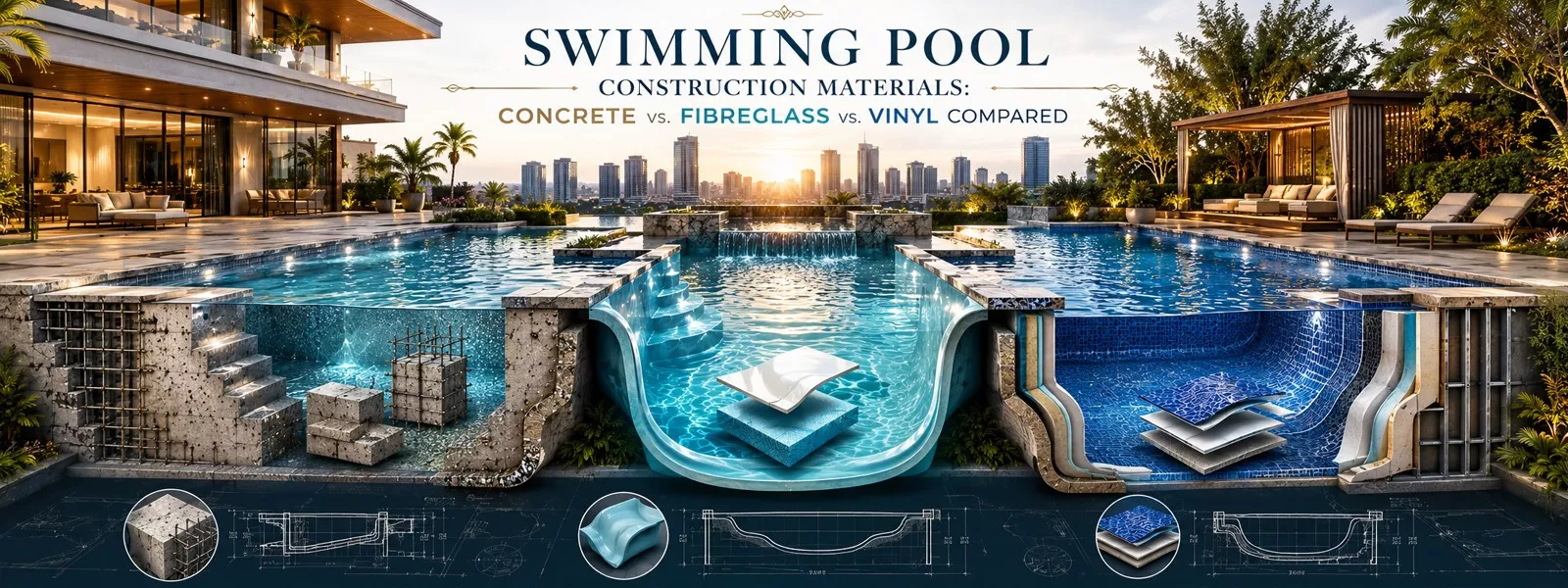
If you are planning pool construction in India, one of the first real decisions you will face is the material. And it matters more than most people think — not just for cost, but for how the pool holds up 10 years from now, how often it needs repairs, and how well it suits your specific location and usage.
This guide breaks down all three main pool types — concrete, fibreglass, and vinyl — in a way that is relevant to Indian conditions, not just copied from a Western construction guide.
💡 DS Water Technology has been building pools across India for 15 years. The guidance here reflects real on-ground experience, not textbook theory.
Why the Material Choice Matters More Than You Think?
Most buyers focus heavily on design and less on the construction material. That is a mistake. The material determines:
- Total construction cost and timeline
- Long-term maintenance expense
- Durability in your specific climate zone
- Repair complexity and repair cost if something goes wrong
- Resale value of the property
Choosing the wrong material for your region or usage pattern can result in cracking, liner deterioration, algae problems, or significant repair costs within 3-5 years. That is an outcome you want to avoid before the first shovel hits the ground.
Swimming Pool Construction Materials: A Head-to-Head Comparison
1. Concrete (RCC / Gunite / Shotcrete) Pools
Concrete is the most common pool construction method in India. It is flexible, durable, and can be built into virtually any shape or size. Whether you want a lap pool, an irregular freeform pool, or a large commercial pool, concrete is typically the go-to solution.
How it is built:
A steel reinforcement frame (rebar) is laid, then concrete is sprayed or poured around it. The interior surface is then finished with plaster, tiles, or a pebble coat. The process takes 3-6 months for a residential pool.
Concrete Pool Cost in India:
| Pool Size | Estimated Cost (INR) |
|---|---|
| Small (10x20 ft) | ₹8 lakh - ₹14 lakh |
| Medium (15x30 ft) | ₹14 lakh - ₹25 lakh |
| Large / Commercial | ₹25 lakh - ₹60 lakh+ |
Pros:
- Fully customisable shape and depth
- Extremely durable — 30+ year lifespan with proper maintenance
- Works for both residential and commercial installations
- Can be retrofitted or expanded later
Cons:
- Longest construction timeline (3-6 months)
- Porous surface can harbour algae — requires more chemical maintenance
- Replastering needed every 10-15 years (₹1.5-₹3 lakh depending on size)
- Higher upfront cost compared to vinyl
2. Fibreglass Pools
Fibreglass pools (also called GRP pools) are pre-manufactured shells that are craned into a prepared excavation and connected to plumbing and filtration systems. They are growing in popularity in Indian metros, particularly in Bangalore, Pune, and Hyderabad.
How it is built:
A factory-moulded fibreglass shell is transported to your site, lowered into the excavated pit, backfilled, and connected to the plumbing system. Installation time is typically 2-6 weeks.
Fibreglass Pool Cost in India:
| Pool Size | Estimated Cost (INR) |
|---|---|
| Small (plunge / 10x18 ft) | ₹6 lakh - ₹12 lakh |
| Medium (12x24 ft) | ₹12 lakh - ₹22 lakh |
| Custom or imported shell | ₹22 lakh - ₹45 lakh+ |
Pros:
- Fastest installation — 2 to 6 weeks
- Smooth non-porous surface — lower chemical usage
- Low long-term maintenance cost
- Good resale appeal in urban properties
Cons:
- Limited to factory-available shapes and sizes — no true custom design
- Transportation logistics can be challenging in congested Indian cities
- Surface can chalk or fade in extreme heat — a real concern in Rajasthan, Delhi, or interior Maharashtra
- Osmotic blistering is possible in poor soil drainage conditions
3. Vinyl Liner Pools
Vinyl liner pools are built with a steel or polymer wall frame and a custom-fitted vinyl membrane as the interior surface. They are more common in Western markets but are used in India for budget residential projects and indoor pools.
Vinyl Liner Pool Cost in India:
| Pool Size | Estimated Cost (INR) |
|---|---|
| Small (8x16 ft) | ₹4 lakh - ₹8 lakh |
| Medium (12x24 ft) | ₹8 lakh - ₹15 lakh |
| Liner replacement only | ₹1.5 lakh - ₹3.5 lakh |
Pros:
- Lowest upfront construction cost
- Smooth surface — no rough patches
- Faster than concrete
Cons:
- Liner needs replacement every 7-12 years — adds lifecycle cost
- Vulnerable to punctures and tears
- UV degradation is a serious concern in Indian summers
- Limited depth options — not suitable for diving
- Not ideal for tropical or coastal climates with extreme humidity fluctuations
Comparison Table: Concrete vs Fibreglass vs Vinyl
| Factor | Concrete | Fibreglass | Vinyl Liner |
|---|---|---|---|
| Construction Time | 3-6 Months | 2-6 Weeks | 4-8 Weeks |
| Upfront Cost (INR) | ₹8-60 Lakh+ | ₹6-45 Lakh+ | ₹4-15 Lakh |
| Lifespan | 30+ Years | 25-30 Years | 15-20 Years (liner 7-12 yr) |
| Maintenance Cost | Moderate-High | Low-Moderate | Low (but liner replacement) |
| Shape Flexibility | Fully Custom | Factory Shapes Only | Semi-Custom |
| Surface Feel | Rough (Plaster/Tile) | Smooth Gel Coat | Smooth Vinyl |
| Repair Difficulty | Moderate | Moderate | Easy-Moderate |
| Best For India Climate | All Zones | Moderate Climates | Mild / Indoor Use |
| Resale Value Impact | High | High | Moderate |
Which Pool Material Works Best in India's Climate?
This is a question most generic blog posts skip entirely. India is not a single climate — the material that works in Shimla will underperform in Chennai.
| City / Region | Climate Challenge | Recommended Material |
|---|---|---|
| Delhi, Jaipur, Lucknow | Extreme summers (45°C+), cold winters | Concrete — handles thermal expansion well |
| Mumbai, Goa, Kerala | High humidity, coastal salinity | Concrete or Fibreglass (with proper gel coat) |
| Bangalore, Pune, Hyderabad | Moderate climate, urban residential | Fibreglass — quick install, low maintenance |
| Chennai, Vizag | Hot + humid + coastal | Concrete — most salt-resistant |
| Hill Stations / Indoor Pools | Mild temps, low UV stress | Vinyl or Fibreglass — budget and speed advantage |
Swimming Pool Repair Costs by Material Type
A topic most pool companies avoid discussing — but it is critical for anyone making a long-term investment. Here is what you should realistically budget for pool repairs in India, broken down by material:
| Repair Type | Concrete Pool | Fibreglass Pool | Vinyl Pool |
|---|---|---|---|
| Surface crack repair | ₹8,000-₹35,000 | ₹15,000-₹50,000 | ₹5,000-₹15,000 (patch) |
| Replaster / Resurface | ₹1.5-₹3.5 lakh | ₹50,000-₹1.5 lakh | Liner replacement: ₹1.5-₹3.5 lakh |
| Leak detection & fix | ₹10,000-₹40,000 | ₹10,000-₹30,000 | ₹8,000-₹25,000 |
| Tile replacement (per sq ft) | ₹150-₹400 | N/A (no tiles) | N/A |
| Filtration system overhaul | ₹30,000-₹90,000 | ₹30,000-₹80,000 | ₹25,000-₹70,000 |
💡 DS Water Technology provides swimming pool repair services across India for all pool types. If your pool is showing cracks, water loss, or surface degradation, our team can assess and repair it — regardless of who originally built it.
How to Choose a Swimming Pool Contractor in India
With dozens of pool contractors operating across India — many without adequate credentials — choosing the right one is not a trivial decision. Here is a practical checklist:
Before you sign any contract, verify:
- Years of experience - ideally 10+ years with verifiable projects
- ISO certification or equivalent - quality management credentials
- Portfolio of completed pools - ask for site visits or photos
- Written warranty - on construction and waterproofing
- Itemised quote - never accept a single lump-sum estimate
- Clarity on subcontractors - who is doing the actual waterproofing, tiling, plumbing?
- Post-completion service plan - what happens if there is a leak in Year 2?
Why DS Water Technology?
With 15 years of active experience in swimming pool construction across India, DS Water Technology brings a level of technical depth and accountability that most contractors cannot match.
| What We Offer | Details |
|---|---|
| Experience | 15 Years — residential, commercial, and industrial pool construction |
| Certifications | ISO Certified | MSME Registered | Certificate of Importer-Exporter |
| Scope | New construction, renovation, repair, water treatment systems |
| Materials | Expert in concrete (RCC/gunite), fibreglass, and vinyl liner pools |
| Post-Build Support | Maintenance and repair services available after project completion |
| Transparency | Itemised quotes, milestone-based payment structures, written warranties |
If you are ready to move from research to action, the next step is getting a site assessment. Every pool project is different — soil conditions, water table depth, usage patterns, and design preferences all affect what material and approach will serve you best. Our team will walk you through it without upselling you on things you do not need.
📞 Get a Free Pool Construction Consultation →
FAQ Section
Q1: What is the cheapest type of swimming pool to build in India?
Vinyl liner pools are typically the lowest-cost option upfront, starting around ₹4-6 lakh for a small pool. However, factor in liner replacement costs every 7-12 years before deciding based on upfront cost alone.
Q2: How long does swimming pool construction take in India?
It depends on the material. Concrete pools take 3-6 months. Fibreglass pools can be installed in 2-6 weeks. Vinyl liner pools typically take 4-8 weeks. Permit delays or supply chain issues can extend timelines.
Q3: Is a fibreglass pool good for Indian summers?
Fibreglass performs well in moderate climates like Bangalore, Pune, and Hyderabad. In extreme heat zones like Delhi or Jaipur (45°C+ summers), gel coat fading and thermal expansion can be issues. A reputable contractor should advise on coating grade and backfill method for your region.
Q4: What is the cost of pool repair in India?
Pool repair cost varies by issue and material. Minor crack repairs range from ₹8,000-₹35,000. Full resurfacing of a concrete pool costs ₹1.5-₹3.5 lakh. Vinyl liner replacement is ₹1.5-₹3.5 lakh. Leak detection and fixing typically ranges from ₹10,000-₹40,000.
Q5: How do I find a reliable swimming pool contractor in India?
Look for contractors with 10+ years of verifiable experience, ISO or MSME registration, and a portfolio of completed projects. Always ask for an itemised quote, written warranty, and clarity on who handles sub-work like waterproofing and plumbing.
Q6: Which pool material requires the least maintenance in India?
Fibreglass has the lowest day-to-day maintenance requirements due to its non-porous surface, which resists algae and reduces chemical usage. Concrete requires the most maintenance — replastering every 10-15 years and higher ongoing chemical costs.
Q7: Can I build a swimming pool in a small backyard in India?
Yes. Plunge pools (as small as 8x12 ft) are a practical option for compact urban spaces. Fibreglass and vinyl liner options have factory sizes suited to smaller footprints. Custom concrete pools can be designed for any available space.
Q8: How much does it cost to maintain a pool in India per year?
Annual pool maintenance in India typically costs ₹40,000-₹1.5 lakh depending on pool size, type, and usage. This includes chemicals, filter maintenance, and periodic cleaning. Concrete pools are at the higher end due to algae management.
Q9: Do I need a permit to build a swimming pool in India?
Regulations vary by state and municipality. In most urban areas, a building permit is required as the pool is considered a permanent structure. Your contractor should advise on local compliance requirements and help with documentation.
Q10: What is the lifespan of a concrete pool?
A well-built concrete pool can last 30 years or more. The shell itself rarely fails — it is the interior surface (plaster or tile) and plumbing that need attention over time. With proper maintenance, a concrete pool is effectively a lifetime asset.
Q11: Can fibreglass pools be installed on sloped or hillside land?
Yes, but with careful site preparation. The excavation must be levelled, and backfill must be managed to prevent hydrostatic pressure on the shell. A qualified contractor experienced in site-specific pool construction is essential for hillside installations.
Q12: What is the difference between RCC pool and gunite pool?
Both are forms of concrete pool construction. RCC (Reinforced Cement Concrete) uses poured concrete over a steel rebar frame. Gunite (also called shotcrete) uses pneumatically sprayed concrete, which creates a denser, more uniform shell. Both are durable — gunite is preferred for complex shapes.
Ready to build or
upgrade your pool?
Tell us about your swimming pool project and one of our experts will contact you within 24 hours with the best solution and pricing.
New Delhi - 110086, Delhi, India