126, Mange Ram Park, Rohini, Delhi, India


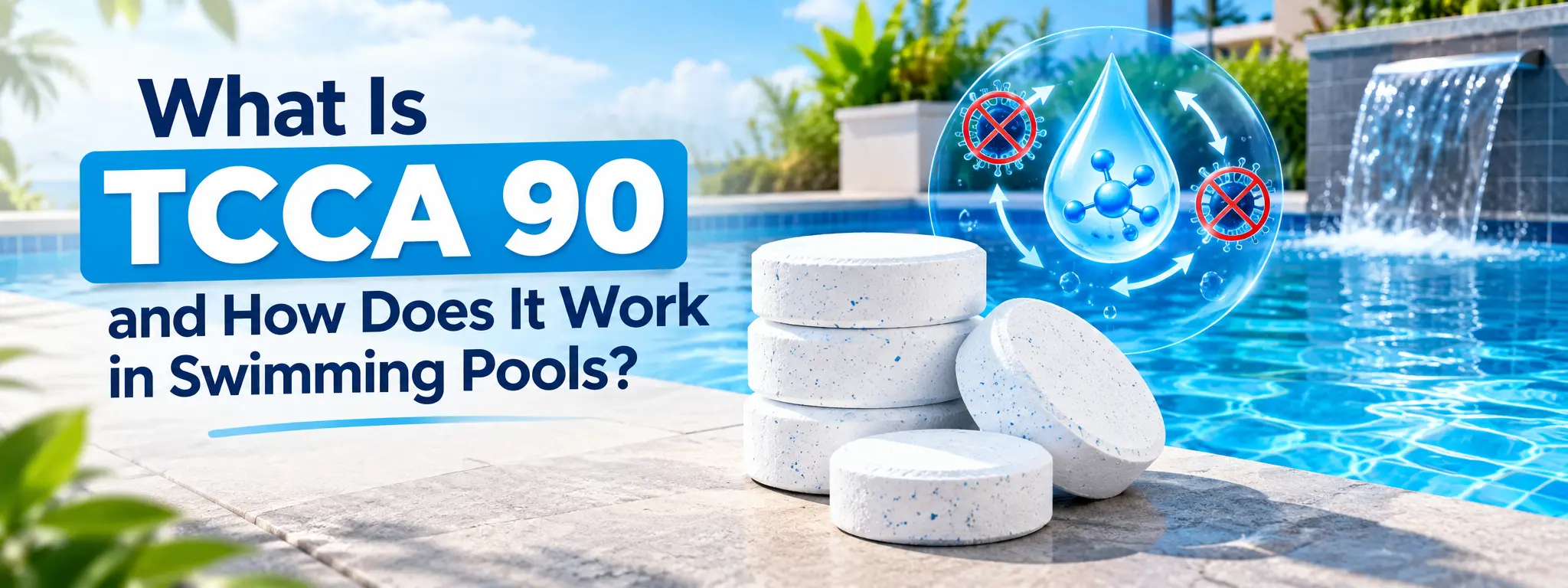
TCCA 90 is a chlorine-based chemical commonly used for swimming pool water disinfection. Known by its full name, trichloroisocyanuric acid, it provides available chlorine to help control bacteria, algae, and other microorganisms when used as part of a properly managed water treatment programme.
Understanding how TCCA 90 works, where it is used, and how it affects swimming pool water chemistry can help pool owners, facility managers, and maintenance professionals make informed decisions about pool sanitation.
This guide explains the properties, applications, benefits, limitations, and safety considerations of TCCA 90, with a particular focus on swimming pool water treatment.
What Is TCCA 90?
TCCA 90 stands for trichloroisocyanuric acid, a stabilised chlorine compound commonly supplied in tablet and granular forms. The number 90 generally refers to its nominal available chlorine content of approximately 90%, although the exact specification should always be confirmed from the product label and technical data sheet.
TCCA 90 is used to supply chlorine for water disinfection. In swimming pools, chlorine helps control microorganisms and supports hygienic water conditions when the concentration, pH, circulation, and filtration are properly managed.
Key Properties of TCCA 90
Some important characteristics of TCCA 90 include:
- High available chlorine content: Provides a concentrated source of chlorine for disinfection.
- Stabilised chlorine formulation: Helps reduce chlorine loss caused by ultraviolet sunlight.
- Different physical forms: Commonly available as tablets and granules.
- Water treatment applications: Used in swimming pool sanitation and other approved disinfection applications.
- Chemical handling requirements: Requires appropriate storage, protective equipment, and careful handling.
The suitability of a particular TCCA 90 product depends on its formulation, intended application, and manufacturer instructions.
How Does TCCA 90 Work in Swimming Pool Water?
When TCCA 90 dissolves in pool water, it releases available chlorine that participates in the disinfection process. The active chlorine species help inactivate susceptible microorganisms and support the control of algae as part of a complete pool maintenance programme.
TCCA 90 also introduces cyanuric acid, which acts as a chlorine stabiliser. This is particularly useful in outdoor swimming pools because sunlight can break down free chlorine.
However, stabiliser concentrations can gradually increase with repeated use of stabilised chlorine products. Excessive cyanuric acid can reduce chlorine’s disinfection effectiveness, making regular water testing important.
Effective pool sanitation therefore depends on more than adding chlorine. Filtration, circulation, pH control, and appropriate testing are all essential.
What Are the Common Uses of TCCA 90?
TCCA 90 is used in applications where chlorine-based disinfection is appropriate and permitted by the product label.
1. Swimming Pool Water Treatment
Swimming pools require a suitable disinfection programme to control microorganisms introduced by swimmers, dust, debris, and the surrounding environment.
TCCA 90 can provide chlorine for routine pool sanitation when the product is suitable for the installation and is applied according to its instructions.
2. Hotel and Resort Swimming Pools
Hotels and resorts often operate swimming pools that require consistent water quality management. Appropriate chlorine-based products may form part of their routine sanitation and maintenance procedures.
3. Clubs and Fitness Centres
Sports clubs, fitness centres, and recreational facilities use pool treatment programmes to maintain suitable water conditions for regular swimming activities.
4. Water Parks and Commercial Pools
Water parks and commercial swimming facilities generally require structured water testing, disinfection, filtration, and circulation procedures. TCCA 90 may be suitable for certain applications when permitted by the treatment system and product instructions.
5. Other Approved Water Treatment Applications
TCCA-based products may have other disinfection applications, depending on their registration, formulation, and label directions. Never assume that a product intended for swimming pools is automatically suitable for drinking water or other specialised water treatment uses.
How to Maintain Swimming Pool Water Quality When Using TCCA 90
Using a chlorine product correctly is only one part of swimming pool maintenance. Water quality should be assessed regularly to ensure that the treatment programme is working as intended.
Monitor Free Chlorine Levels
Free chlorine testing helps determine whether sufficient disinfectant is available in the water. The appropriate operating range depends on the pool type, local requirements, the use of cyanuric acid, and the product instructions.
Check Pool Water pH
The pH level affects chlorine disinfection performance and swimmer comfort. A commonly used pool pH range is approximately 7.2–7.8, although the applicable operating standard and chemical product directions should guide the final target.
TCCA 90 is acidic and can lower pool pH and total alkalinity over time. Regular testing helps identify when corrective treatment may be necessary.
Monitor Cyanuric Acid
Because TCCA 90 contributes cyanuric acid to pool water, stabiliser levels should be monitored, especially in pools that use it regularly.
If cyanuric acid accumulates excessively, chlorine effectiveness can be reduced. Water replacement or a revised treatment programme may be required, depending on test results and applicable guidance.
Maintain Filtration and Circulation
A properly maintained filtration system removes suspended particles, while circulation distributes treated water throughout the pool. Both processes complement chemical disinfection.
TCCA 90 Tablets vs. Granules: What Is the Difference?
TCCA 90 is commonly available in tablet and granular forms. The main difference is the physical format and the method of application permitted by the product instructions.
TCCA 90 Tablets
Tablets are generally used in compatible chlorine feeders or dosing devices designed for the specific product. Their dissolution characteristics can make them suitable for controlled chlorine application.
TCCA 90 Granules
Granular TCCA 90 provides an alternative product format for applications that permit granular dosing. The correct preparation and application method must follow the product label.
Which Form Should You Choose?
The choice depends on the pool’s treatment equipment, maintenance requirements, dosing method, and manufacturer recommendations.
Do not assume that tablets and granules can be used interchangeably in every dosing system. Always verify the product specifications before selecting a format.
Is TCCA 90 Suitable for Indoor and Outdoor Swimming Pools?
TCCA 90 is often considered for outdoor pools because its stabilised chlorine formulation helps reduce chlorine loss from sunlight.
Indoor pools receive less direct ultraviolet exposure, so the stabilising benefit may be less useful. Repeated use can also increase cyanuric acid levels, which may complicate chlorine management.
For this reason, pool operators should consider the pool environment, existing water chemistry, dosing equipment, and applicable guidance before choosing a disinfectant.
The best treatment programme is the one that maintains suitable water quality while accounting for the specific operating conditions of the pool.
TCCA 90 Safety, Storage, and Handling
TCCA 90 is a reactive chlorine-based chemical and must be handled carefully.
Follow these essential precautions:
- Store the product in its original, tightly closed container in a cool, dry, well-ventilated area.
- Keep it away from moisture, heat, acids, incompatible chemicals, and combustible or organic materials.
- Wear suitable chemical-resistant gloves and eye protection when handling it.
- Avoid breathing dust and prevent contact with skin and eyes.
- Never mix TCCA 90 with other pool chemicals, particularly acids or other chlorine products.
- Follow the product label for dosing, application, spill response, and disposal.
- Keep the chemical securely away from children and unauthorised personnel.
Never combine different chlorine products or improvise chemical mixing procedures. Incompatible chemicals can react dangerously and may release toxic gases.
TCCA 90 vs. Other Pool Chlorine Products
Different chlorine products have different chemical properties and operational requirements.
TCCA 90 vs. Calcium Hypochlorite
TCCA 90 is a stabilised chlorine product that adds cyanuric acid to the pool. Calcium hypochlorite does not add cyanuric acid but adds calcium to the water.
The choice depends on stabiliser levels, calcium hardness, dosing requirements, and the overall water treatment programme.
TCCA 90 vs. Sodium Hypochlorite
Sodium hypochlorite is a liquid chlorine product that does not add cyanuric acid. It can be suitable for systems that use liquid chemical dosing, including some automated installations.
TCCA 90, by comparison, is commonly supplied as a solid product and may be more convenient for compatible tablet-feeding systems.
Neither option is universally best. Pool conditions and water test results should determine the appropriate choice.
Conclusion
TCCA 90 is an important chlorine-based disinfectant for suitable swimming pool water treatment applications. Its high available chlorine content and stabilised formulation can support routine pool sanitation, particularly in outdoor pools.
However, effective results depend on correct application, regular testing, pH management, cyanuric acid monitoring, adequate filtration, and safe chemical handling.
Understanding these factors helps pool owners, contractors, and maintenance professionals make informed decisions about their water treatment requirements.
For product specifications, available TCCA 90 forms, and purchasing information, visit the DS Water Technology for TCCA 90 chemical.
Frequently Asked Questions About TCCA 90
1. What is TCCA 90 used for in swimming pools?
TCCA 90 is a stabilised chlorine compound used to disinfect swimming pool water. It helps control bacteria and other susceptible microorganisms when applied as part of a properly managed pool treatment programme.
2. How does TCCA 90 differ from regular chlorine?
TCCA 90 is a stabilised chlorine product with a high available chlorine content. It also adds cyanuric acid to the water, which helps protect chlorine from sunlight. Other chlorine products may have different effects on pool water chemistry.
3. Is TCCA 90 suitable for outdoor swimming pools?
TCCA 90 can be suitable for outdoor swimming pools because its stabiliser helps reduce chlorine loss caused by ultraviolet sunlight. However, cyanuric acid levels must be monitored to prevent excessive accumulation.
4. Can TCCA 90 affect swimming pool pH?
Yes. TCCA 90 is acidic and can gradually lower pool water pH and total alkalinity. Regular testing helps pool operators identify changes and maintain suitable water chemistry.
5. Why should cyanuric acid levels be checked when using TCCA 90?
TCCA 90 adds cyanuric acid to pool water as it is used. If the stabiliser accumulates excessively, it can reduce chlorine’s disinfection effectiveness. Regular testing helps operators determine whether the treatment programme needs adjustment.