126, Mange Ram Park, Rohini, Delhi, India


DS Water Technology is a swimming pool contractor and builder located in Rohini, Delhi. We take on projects for both residential and commercial swimming pool construction throughout Delhi NCR. We have more than a decade of experience in swimming pool construction, and our founder Dharmendra Singh started the business in 2011. We’ve completed more than 500 swimming pool construction projects and operate under a fixed-price construction agreement. As of 2026, our team will have 15 years of construction experience for each project we take on.
Most construction projects for swimming pools in India will fail, and the reasons are the same. A swimming pool is a reinforced concrete structure. It has an engineered water circulation system and has mechanical equipment that fits within a waterproofed surface and is properly sized. Costs of small residential swimming pools will start at ₹8 lakhs, and large commercial pools will cost multiple crores. The ultimate result of the project will rely on what swimming pool contractor you select.
What Does a Swimming Pool Contractor Do?
A swimming pool construction contractor is the sole bearer for the total construction. The words construction, contractor, laborer, construction supervisor, and construction builder are not synonymous. The construction contractor has a construction contract and therefore has a construction obligation for the ultimate outcome.
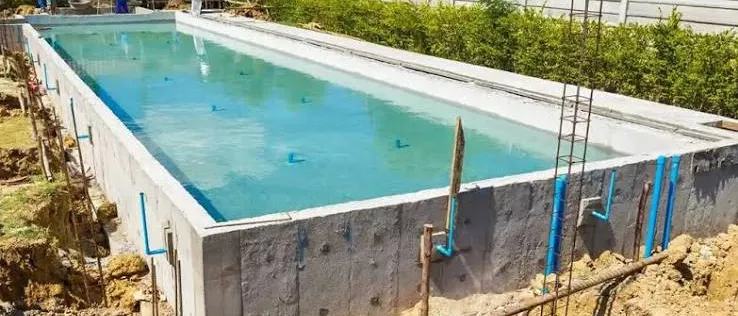
A swimming pool construction contractor has obligations in four areas:
You simply review the progress and decisions made, as the contractor takes full responsibility. If responsibilities are shared among six vendors then decisions are made by vendors with no accountability for the overall result.
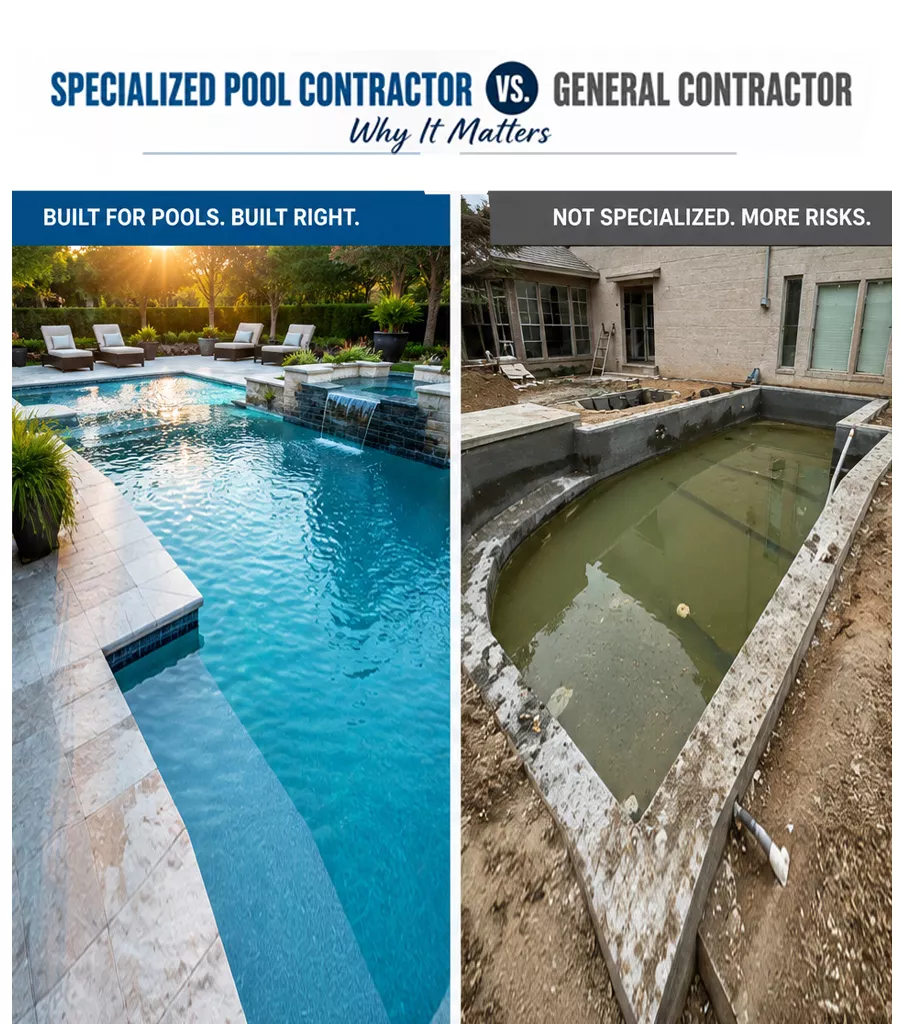
Specialized Swimming Pool Contractor vs. General Contractor — Why Does It Matters?
The differences between a specialized swimming pool contractor and a general swimming pool builder become apparent only post-construction and not during the sales process.
Waterproofing specification: Pool waterproofing requires a system that is immersion grade and continuous. General contractors will likely use construction grade waterproofing that were designed for use on roofs and in basements. Those are not designed for exposure to hydrostatic pressure and pool chemicals.
Hydraulic design: Filtration needs to be sized for the volume of the pool and the bather load. An undersized pump-filter combination leads to a turnover cycle that is inefficient, promotes the growth of algae and results in a high chemical demand. This is a concern the specialized swimming pool builder is trained in.
Finish selection: There are many pool finishes including plaster, glass mosaic, porcelain tile, and fibreglass. These finishes have prescriptive substrate and application requirements. A specialist crew will not make mistakes such as skipping a primer coat or prematurely filling.
Long-term accountability: A specialized swimming pool contractor will only focus on swimming pools. A general contractor who considers building a swimming pool as a secondary project will have a lower motivation to get it right the first time.
Types of Swimming Pools We Construct
The appropriate pool type is determined by the site and budget and by how you plan to use the pool. Each of the different types of swimming pools will have different construction requirements as far as structure and equipment.
Concrete / Gunite Swimming Pools (RCC)
In the context of India, Gunite/Concrete swimming pools are the most popular choice for swimming pool construction. Gunite offers full design flexibility for custom swimming pools for different shapes, depths and dimensions. For the varying ground conditions of Delhi NCR, RCC swimming pools are the most durable option.
Fibreglass Swimming Pools
Fibreglass swimming pools are pre-formed shells and are faster to install than RCC pools. Because they are fixed in shapes and sizes, they offer less design flexibility than a concrete pool; however, in cases where the speed of installation is the most important factor, then fibreglass pools are a good choice.
Vinyl Liner Swimming Pools
Vinyl liner pools offer custom design flexibility by utilizing a steel or polymer frame with a custom-fitted vinyl liner. The initial cost of these swimming pools is relatively inexpensive; however, because of the short lifespan of the liner (8-10 years) they are typically considered to be a less desirable option. Due to the high level of UV exposure in India, they are relatively uncommon, however, DS Water Technology will provide these swimming pools if requested by the client.
Infinity and Overflow Swimming Pools
Infinity and Overflow Swimming Pools Flowing to a balance tank, it recirculates. This swimming pool design is often used in hotels, resorts, and in premium residences. To maintain a constant water level in the overflow edge, which must be in a straight line, requires some precision as it has to be within a few mm across its entire length and involves a lot of hydraulic and civil precision.
Rooftop and Indoor Swimming Pools
When it comes to rooftop swimming pools, the design can only commence after the assessment of the roof can hold the structural loads. 1 cubic meter of water weighs 1,000 kg. Hence a pool of 6m x 3m x 1.2m can easily weigh 21 tons. Condensation can cause a real issue and needs to be dealt with in Indoor pools with the help of an HVAC system. Both these problems can be solved easily if the right swimming pool builder is involved in the design of the pool.
Lap Swimming Pools and Sport Pools
These swimming pools are designed specifically for swimming. Competition swimming pools are built according to FINA regulations and can be 50m or 25m in length and contain provisions for timing touch pads as well as lane widths and depth set requirements. FINA compliant construction has been done by DS Water Technology for clubs and institutions across the Delhi NCR.
Luxury Swimming Pools
These luxury swimming pools have custom size and finish and contain spa or jacuzzi sections, in-pool seating, ledges tanning, lighted with LEDs of various colors, mosaic or natural stone finishes, and custom water features and automated chemical dosing. Being a swimming pool builder, we can integrate the pools with the surroundings with the help of landscape architects and designers.
Step by Step Swimming Pool Construction Process
At DS Water Technology, we have a defined process for constructing swimming pools, and we do not skip phases. If a phase is skipped, we will be faced with problems after handing over the project, and fixing these problems will be costly.
Step 1: Site Inspection and Survey
Our engineers will assess the soil's ability to bear the weight of the swimming pool, the presence of expansive soil types such as black cotton soil, the level of the water table, the distance to existing foundations, the presence of underground utilities, and the accessibility of the site to construction equipment. These factors will help us decide the design of the structure and the specification for waterproofing.
Step 2: Design, Planning, and Approvals
Structural drawings are created with details for the plumbing layout, a schedule for equipment, and specifications for the finishes. For commercial swimming pools, we conduct hydraulic calculations to ensure the water turnover is six hours or less. We approve all necessary permits prior to the start of excavation.
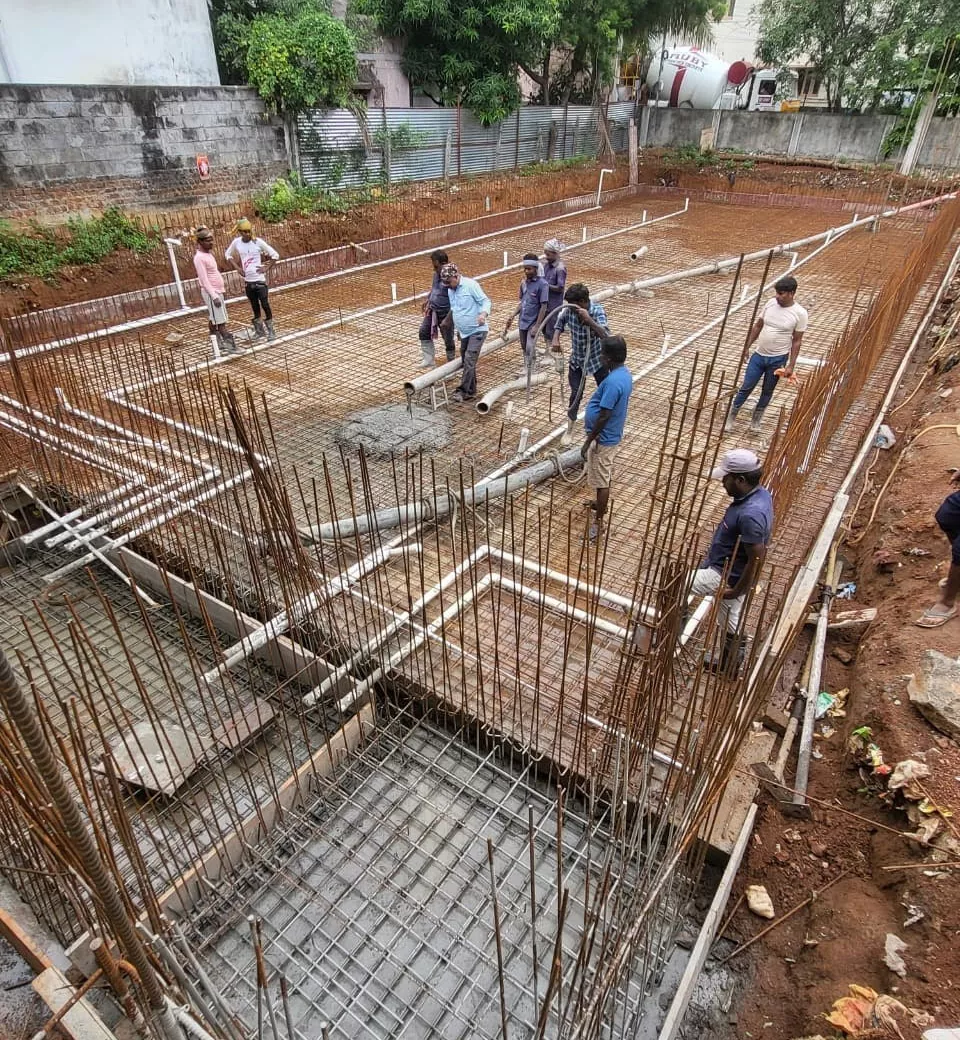
Step 3: Excavation
Swimming Pool Excavation follows the structural drawings, with tolerance added for working space and drainage. We will never excavate beyond the required dimensions; the soil used to backfill is seldom as stable as soil that is undisturbed. Shoring is used when required for adjacent structures.
Step 4: Structural Work — RCC Shell
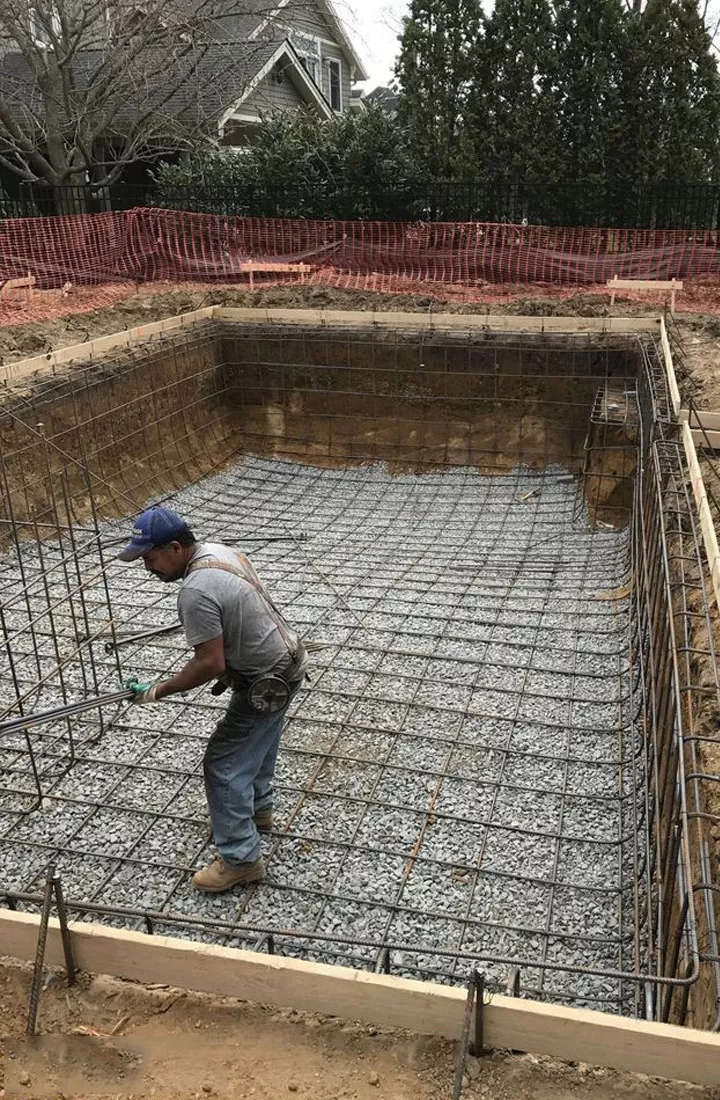
For the pool shell, we use a minimum of an M25 grade of concrete with a low water-cement ratio to minimize porosity. Reinforcing is placed with a 40 mm cover which is the standard for underground construction that is exposed to moisture. A hydrophilic swelling strip is placed in construction joints to prevent water from entering the joints.
Step 5: Plumbing and Equipment Installation
We install the main drains, skimmers, return lines, and spa jets. We also install the filtration tanks, pumps, chemical dosing equipment, and heating equipment in the plant room. The size of the pipes is determined to ensure that the flow and pump cavitation is within limits.
Step 6: Waterproofing
This is the most important step in the construction of a swimming pool. Our system is constructed of two layers. On the inside of the concrete mix, we place a waterproof crystalline additive and, as a second layer, we apply a cementitious (or polyurethane) membrane in a surface coating. Prior to tiling, the pool is subjected to a 72 hour water test.
Step 7: Surface Finishing
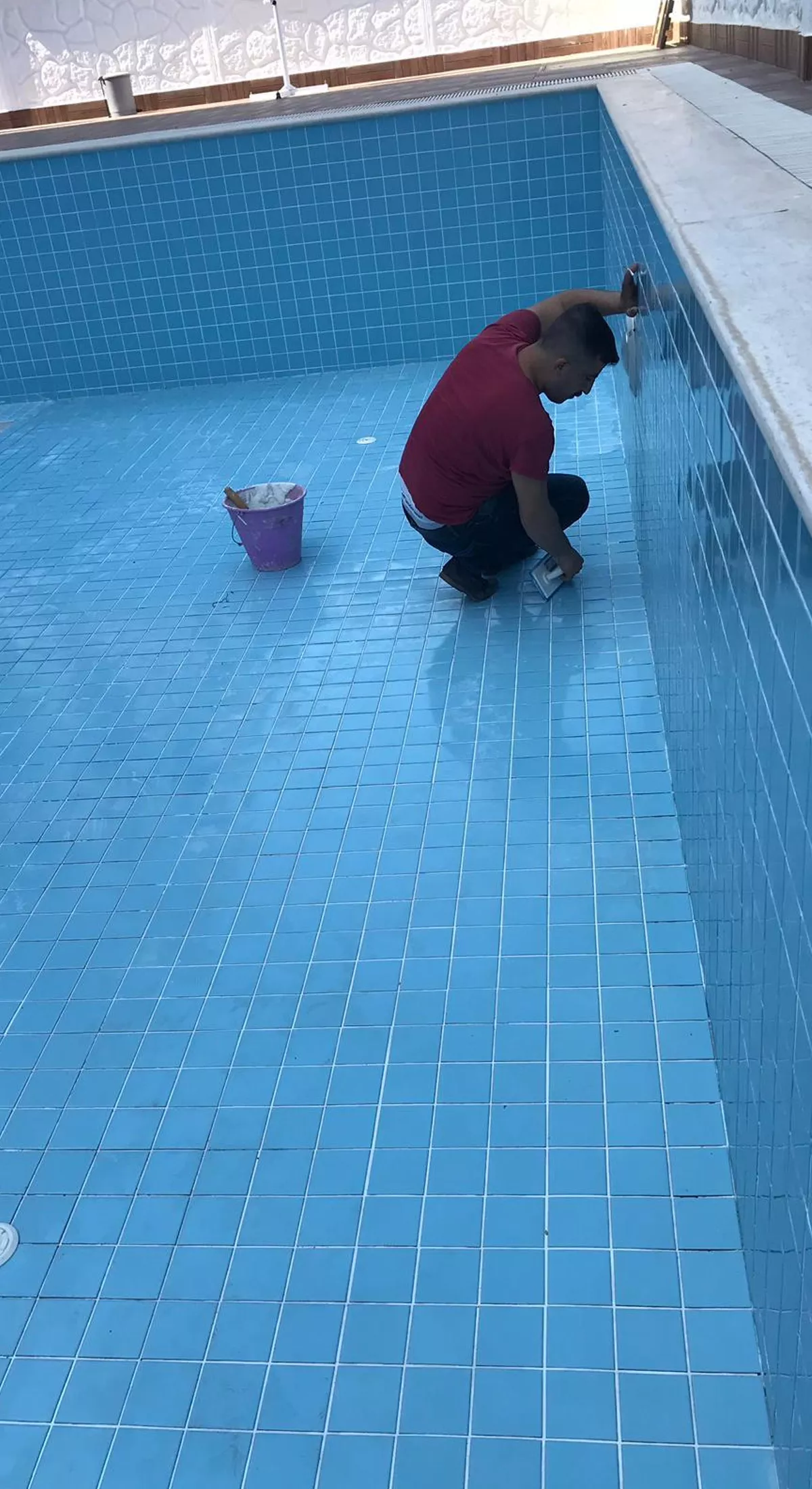
The interior finish options include ceramic or porcelain tiles, exposed aggregate plaster, or pebble finish. Slip resistant tiles must have a minimum of Class C slip resistance, and grout must be polymer-modified for permanent immersion in water.
Step 8: Commissioning and Testing
Once the swimming pool is filled, we balance the water chemistry to the following parameters: pH 7.2–7.6, total alkalinity 80–120 ppm, and free chlorine 1–3 ppm. We also check flow rates, filter pressure and backwash cycles, and anti-entrapment drain covers. A commissioning report along with the complete handover documentation is provided as standard.
Step 9: Training, Handover, and Ongoing Support
For commercial swimming pools, the facility management staff are trained on operation of the equipment, chemical handling, and the emergency procedures. Each project is supplied with equipment manuals, a water report, a maintenance report, and a written statement indicating the defect liability period. Annual Maintenance Contracts (AMC) are offered post-handover.
Materials Used in Swimming Pool Construction
Material selection determines how long a pool lasts and how much upkeep it needs.
| Component | Material Used | Why It Matters |
|---|---|---|
| Pool Shell | M25/M30 RCC with low W/C ratio | Controls porosity and structural strength |
| Waterproofing | Crystalline admixture + surface membrane | Prevents seepage through shell and joints |
| Reinforcement | Fe500 TMT bars with 40mm cover | Resists soil pressure and water table uplift |
| Pool Interior | Vitrified/porcelain tile or quartz plaster | Durability, hygiene, and appearance |
| Pipework | UPVC/CPVC pressure-rated pipe | Corrosion resistance and long service life |
| Filtration Media | Graded silica sand or glass media | Removes suspended particles to ≤0.1 NTU |
| Chemical Dosing | Automated chlorine and pH dosing | Maintains safe water chemistry consistently |
Mechanical Swimming Pool Filtration and Equipment Installation
A swimming pool requires a mechanical core in order to provide a safe and clean swimming environment. Every swimming pool construction project contains three primary components:
The pool pump — this component draws water from the skimmers and main drains, forces the water through the filtration process, and returns the water via wall inlets. Proper sizing is critical. If the swimming pool pump is undersized, it will lead to extended turnover times; if the pump is oversized, it will create high and potentially damaging flow velocities to the filtration media, while increasing energy costs.
The pool filter — employs sand, cartridge, or glass media in removing suspended solids. Multiple filter vessels may be required for some commercial pools to meet the turnover requirements.
Sanitation units — Chlorine feeders, salt chlorinators, UV, or ozone units are used for the removal of biological contaminants. For commercial swimming pool construction, automated dosing is now the standard, while for residential swimming pool units is becoming the standard.
Custom Swimming Pool Design and Building
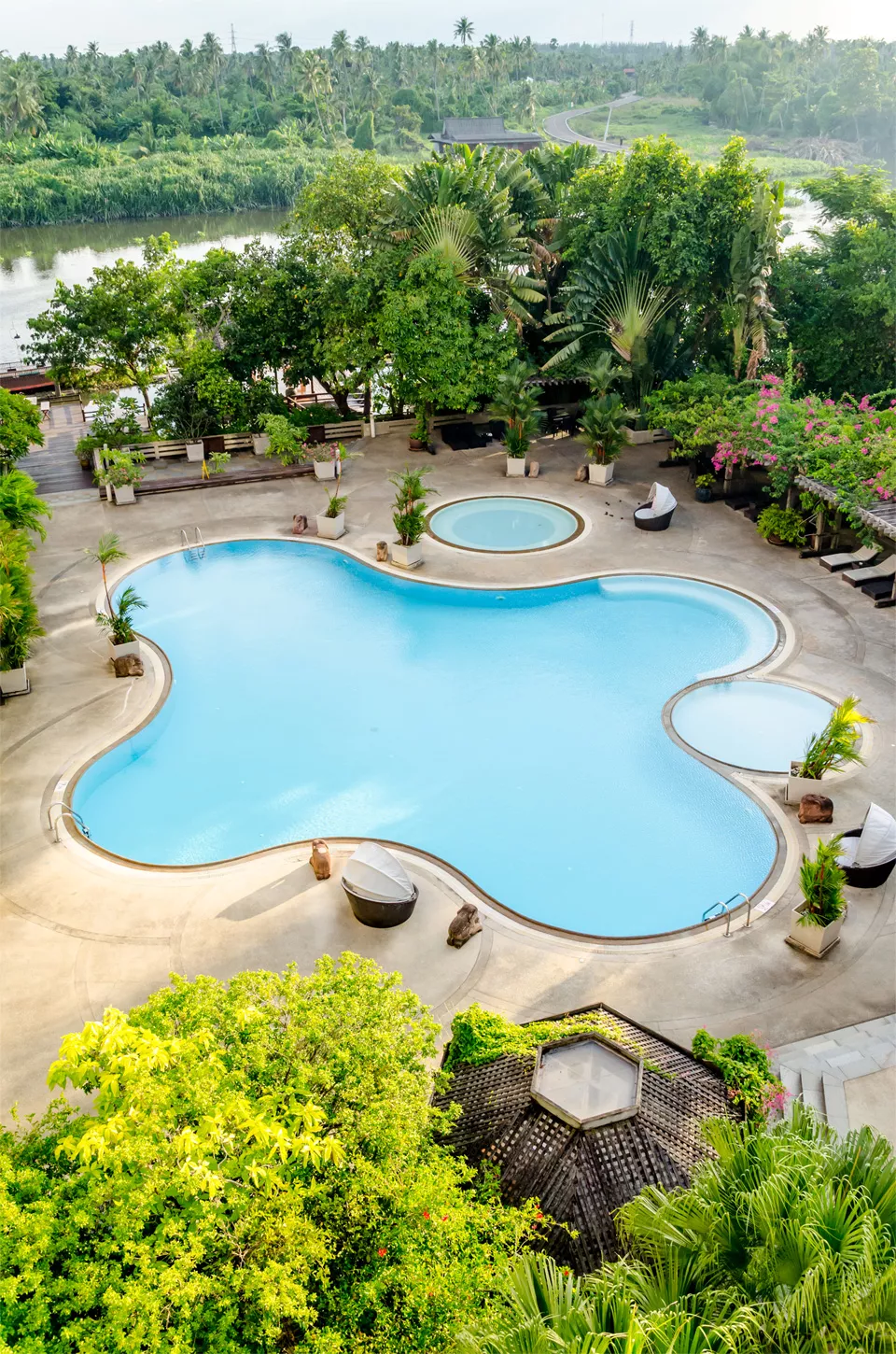
A custom swimming pool builder has a more in-depth understanding of design and construction than pouring a concrete shell. The design element of a swimming pool is what determines how well the pool will function for the next 20-30 years, and how well the pool will balance with the architecture, and stay within the budget.
At DS Water Technology, the design first considers the use the pool will serve. Only after this consideration is the design element executed. Without this understanding and design, the final product is a compromise; swimming pool units that are too shallow for lap swimming, pools whose shape and design is too unbalanced for the space, or units that are more elaborate than what the client really wants.
Custom design elements that our pool builders consider include:
- Pool shapes and profiles with shallow and deep split depth preferences
- Integrated spas or jacuzzis
- Deck jets, waterfalls, rain curtain features, etc.
- Infinity and overflow edge pools with balance tank designs
- Underwater LEDs with color selections
- Automated chemical dosing and management systems
- Heaters (solar and/or heat pumps)
- Protective safety covers (automated and manual) for heat retention
The mistakes to avoid are judging builders based on price, instead of quality of past work; accepting the builder's vagueness in design; accepting that the builder retains the design, approvals and compliance to build; and not knowing what support you will have if problems arise during the warranty period.
Costs of Building a Swimming Pool in India
Custom design features drive the price of new swimming pools, hence costs without a formal site visit are mostly meaningless. The water table, excavation work, accessibility, the design volume, and systems can all impact the price significantly. The following costs from 2026 estimate the price of building a pool in the Delhi NCR area.
Residential Swimming Pool Cost
Construction of in-ground concrete residential swimming pools with DS Water Technology will typically costs ₹800 – ₹1,450 per square foot. Complex design features (e.g. Infinity edges and rooftop pools) will increase the costs to ₹1,450 – ₹2,750 per square foot.
- Small plunge pool (approx. 10×20 ft): ₹8 lakhs – ₹12 lakhs
- Standard family pool (approx. 15×30 ft): ₹15 lakhs – ₹25 lakhs
- FRP modular pool (including installation): ₹2.5 lakhs – ₹4.5 lakhs
- Cost of filtration systems and LED lighting: typically add ₹1 lakh – ₹2 lakhs to the project cost
Cost of constructing a commercial swimming pool
The cost of constructing a commercial swimming pool usually ranges from ₹1,000 - ₹1,500 per sq. ft. A full turnkey project for a hotel, sports academy, or housing society usually costs between ₹60 lakhs - ₹5 crores, depending on the size, depth, and features of the pool. Large commercial swimming pools usually take between 2.5 - 3 months to complete, from excavation to final commissioning of the pool.
Factors affecting swimming pool construction cost
- Size and shape of pool — increased size and freeform designs require more materials and increased labor costs
- Ground conditions — increased excavation costs are caused by rocky ground; a high water table will require dewatering and more costly structural design.
- Depth of pool — a deeper pool also requires more materials as compared to a constant depth, leisure pool
- Specification of equipment — an increased initial outlay is required for variable speed pumps, UV disinfection, salt chlorination, and heat pumps, although these systems offer an operational cost savings in the long run.
- Surface finishing — the long term maintenance costs associated with pebble plaster are much more costly than standard vitrified tile
- Additional features — project costs will increase with the addition of water features, integrated spas, automation, covers, and infinity edges.
What are the Considerations When Selecting a Swimming Pool Contractor?
Price is a poor deciding factor when choosing a swimming pool contractor. Consider the following:
Portfolio of completed projects: Request project locations, not digital renderings. Visit the project site (if accessible) and speak with the client regarding their experience post project completion.
Ability to communicate technical aspects: Ask the swimming pool contractor to describe their method of waterproofing and their process of determining filtration needs. If a contractor cannot describe the process, they are not suitable for the project.
In-house vs. subcontracted work: Determine if the contractor employs his/her own core civil work team. Complete subcontracting creates a lapse in responsibility between the signed party and the party performing the work.
Insurance: For commercial projects, verify workmen's compensation and third party liability insurance coverage prior to the start of work.
References, not testimonials: A swimming pool contractor will provide previous clients as references, without hesitation.
Common Issues to Consider When Selecting a Pool Builder
The following issues are common when selecting a swimming pool contractor and are not rare exceptions;
Significantly lower bids
When a contractor submits a bid 30-40% lower than their competitors for the same work, it is indicative of a lower quality work or materials (including waterproofing and equipment), and it is likely that the swimming contractor intends to renegotiate the contract scope once you are committed to the contract.
Vague Specifications
Statements such as "a high quality pump and filter" are meaningless. The swimming pool contractor should clearly specify the brand, model and rated flow capacity. If a contractor refuses to provide specifications, they are reserving the right to install the lowest quality work.
Concerning Defect Liability Clauses
A reputable swimming pool contractor will include a defect liability period of 12-24 months. An unwillingness to incorporate such a clause should raise concerns regarding the contractor's confidence in their work.
Concerning Advance Payments
An advance payment of 20-25% of the contract value is common prior to the contractor's mobilization to the site. An advance payment of 50% or more is a sign of financial risk.
Concerning Changes in Scope
Any swimming pool contractor who manages changes in a verbal or informal manner is facilitating a future dispute. A formal change order is required to document the impacts to costs and schedule prior to the execution of the change.
How are Swimming Pool Contractor Contracts Structured in India?
Knowing how contracts are structured will give you an advantage when facing the common tripwires associated with swimming pool construction. Generally three main contract types are used.
Fixed price: As the name implies the price is fixed for the defined scope of work. This is the most straightforward type of contract. It works best when the scope of work is clearly defined and the risk of a cost overrun is borne by the swimming pool contractor.
Measured Works: Payment is made based on work that is quantified and measured. This may be for, for example, waterproofing that is measured in square meters or piping that is measured in linear meters. Unit costs are fixed, however, the final cost is unknown and varies based on the quantities that are measured. This type of pool contract is common for large commercial swimming pools.
Cost Plus: In this type of contract the contractor will charge a fee, which is typically between 10 and 18%, on top of the actual costs of construction. Why this type of contract should be avoided is because the financial risk is borne by the client, which is only acceptable if an independent quantity surveyor has been retained and a relationship with the swimming pool contractor has been established.
Whichever model is used for the swimming pool, the contract should clearly outline the complete scope, terms of payment, specification of materials and equipment, and brand and model of each. In addition, the contract should include the timeline with key milestones, a defect liability period and describe how the scope can be altered.
How Swimming Pool Contractor Fees Work?
With lump sum contracts, the cost is all inclusive and the contractor's margin is contained within the final figure. Margins for swimming pool projects in India typically fall within the range of 15% to 25% of the total project cost. The size and complexity of the project, in addition to the contractor's operating costs, are all contributing factors. Commercial swimming pool projects such as hotels and sports facilities tend to fall within the upper range due to the added complexity of required documentation, regulatory compliance, and contract obligations.
A Bill of Quantities should be requested from every swimming pool contractor. This provides the specific cost for all materials, labor and equipment. A Bill of Quantities is critical to ensure you are not comparing total project costs which may include completely different project scopes.
What You Should Expect When Your Swimming Pool Is Handed Over To You?
This is the stage where a lot of pool builders tend to be a disappointment, and it is the best opportunity for you to gauge whether you made the right choice in hiring a particular swimming pool builder. The handover process by DS Water Technology comprises the following:
- Handover of documentation for all equipment including service manuals, warranty cards, and service contacts for every pump, filter, dosing unit, lighting system, and heater.
- Handover of reports documenting the testing of the water for the final reading of pH, free chlorine, alkalinity, TDS, and turbidity at the time of handover.
- A written guide detailing the daily, weekly, monthly, and yearly tasks along with dosing recommendations.
- For commercial swimming pools, a training session to teach the operators how to use the equipment and how to manage the chemicals and respond to emergencies.
- Written assurance of the start of the defect liability period along with the procedure for reporting defects.
The contractor who hands you the keys without the documents is leaving you to figure it all out for yourself, starting on day one.
Questions for a Pool Builder Before Employing Their Services
What are the waterproofing systems you will employ and the reasoning behind your choice?
What methods and formulations do you use for sizing a pool’s filtration system?
Which of your staff or subcontractors is onsite to supervise the work?
From the last two years of your work, may I have the contact information for three or four customers?
What is the coverage for your defect liability period?
What is your process for handling an alteration to your scope of work?
What documents will you provide me at the time of the handover?
Is there an Annual Maintenance Contract (AMC) that you provide after the handover, and what does it include?
Have you done work of the same type and size as the work I am proposing?
What is your best estimate for the completion of this work, and what are the uncertainties that could modify your estimate?
A pool builder who provides detailed and direct answers to these types of questions is a builder to consider. One who does the opposite is also showing you something important.
How DS Water Technology Treats Each Swimming Pool Construction Build?
DS Water Technology is a swimming pool construction specialist and builder located in Rohini, Delhi. We have been in the industry since 2011 with Dharmendra Singh as our founder. Our specialization is in the construction of swimming pools, water treatment systems, and water-related construction with supporting infrastructure. We have built our focus on understanding the challenges related to construction of swimming pools in the North Indian environments, such as the Delhi NCR region, where there are high water tables in some areas, expansive soils, and extreme variations in seasonal temperatures.
How our swimming pool building process works:
- Fixed price contracts with complete Bills of Quantities - every item and piece of equipment is named.
- Core team employed directly, no sub-contracting of the entire scope.
- Dedicated site engineer for all key construction stages.
- No subcontracting of waterproofing or structural work, where most failures begin.
- Complete documentation file at no extra charge at handover.
- Construction of residential and commercial swimming pools in Delhi, Gurugram, Noida, Greater Noida, Faridabad, Ghaziabad, Sonipat, and other locations in North India.
- Post construction Annual Maintenance Contract (AMC) is available for servicing of all swimming pool equipment.
We work with home owners wishing to build a private swimming pool, with commercial developers and hotel groups, as well as clients wishing to have remedial work done after a bad experience with a contractor. The process is the same every time, a site assessment, a detailed proposal, and a scope of work before any commitment is made.