126, Mange Ram Park, Rohini, Delhi, India


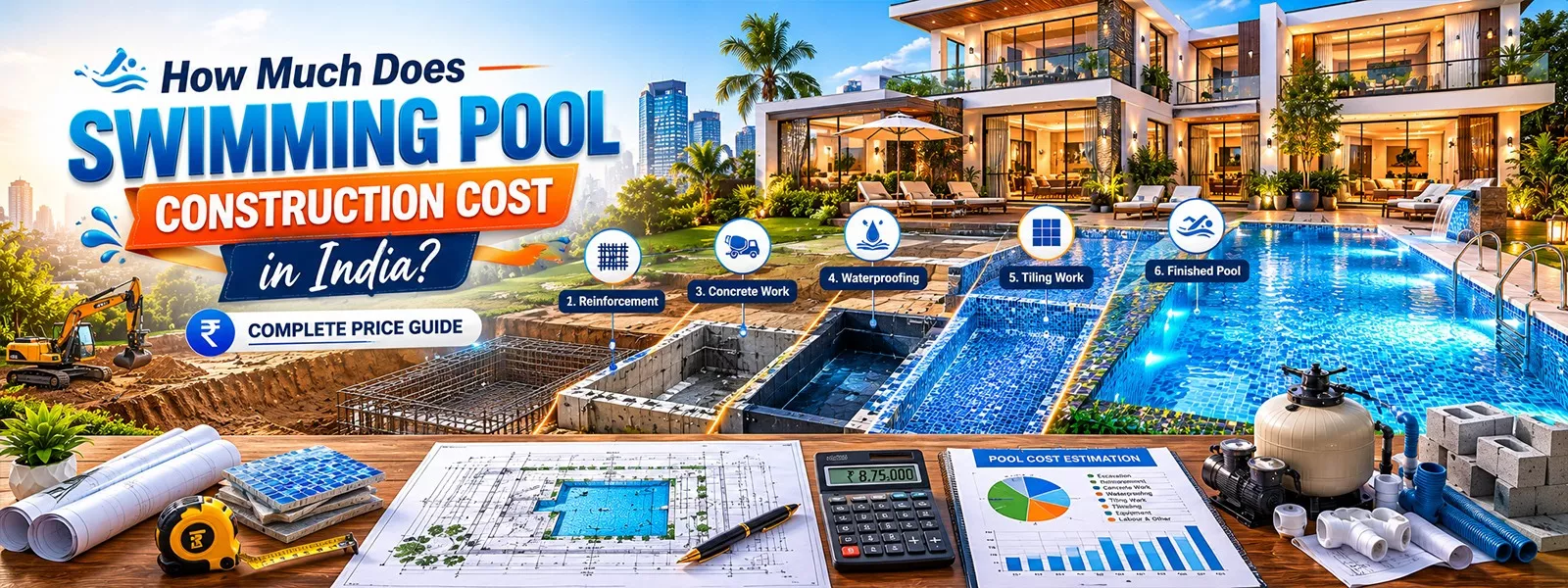
If you are planning a swimming pool and trying to figure out what it will actually cost in India, you have landed in the right place. This guide covers real price ranges — not vague estimates — along with a breakdown of what drives those numbers up or down.
Whether you are building a private pool at home, a hotel pool, or a rooftop pool in a city apartment complex, the cost varies significantly. Understanding why helps you budget smarter and choose the right swimming pool contractor without getting burned.
How Much Does a Swimming Pool Cost in India? (Quick Answer)
For most residential pools in India, construction costs typically fall between ₹8 lakh and ₹60 lakh or more depending on size, type, and features. A basic 10x20 ft pool with standard tiling and filtration can come in under ₹15 lakh. A large infinity pool with automation and premium finishes can easily exceed ₹1 crore.
Here is a quick snapshot before we go deeper:
| Pool Type | Approx. Size | Estimated Cost (INR) |
|---|---|---|
| Standard Residential Pool | 10x20 ft | ₹8 Lakh - ₹18 Lakh |
| Mid-Size Family Pool | 15x30 ft | ₹18 Lakh - ₹35 Lakh |
| Large Swimming Pool | 20x40 ft | ₹35 Lakh - ₹70 Lakh |
| Rooftop / Terrace Pool | Custom | ₹20 Lakh - ₹60 Lakh+ |
| Infinity Pool | Custom | ₹40 Lakh - ₹1 Crore+ |
| Plunge / Compact Pool | 8x12 ft | ₹6 Lakh - ₹12 Lakh |
| Commercial / Hotel Pool | Varies | ₹60 Lakh - ₹5 Crore+ |
These are broad ranges. The actual quote you get will depend on your location, soil conditions, the contractor you choose, and the materials and equipment specified.
Cost by Pool Type
Not all pools are built the same way. The type of pool you choose is the single biggest determinant of your construction budget.
- Concrete / RCC pools: Most common in India. Durable, fully customisable. This is what most swimming pool builders default to. Cost starts at around ₹8 lakh for small residential projects.
- Fibreglass pools: Factory-manufactured shell dropped into an excavated pit. Faster to install, but limited in shape. Popular in smaller cities. Cost from ₹6 to ₹18 lakh installed.
- Vinyl liner pools: Less common in India but used in some budget residential projects. Shorter lifespan; liner needs replacement every 8-10 years.
- Infinity / overflow pools: Require a balance tank and overflow channel construction, which adds ₹5-10 lakh to base cost. Predominantly a luxury segment.
- Rooftop pools: Structural load analysis of the building is mandatory. Waterproofing is more complex. Premium on cost due to logistics and engineering.
Cost Per Square Foot
A useful benchmark: RCC pool construction in India typically costs between ₹2,000 and ₹5,500 per square foot of water surface area, depending on the city, soil type, and the level of finishes. Premium projects with automation, heating, and imported tiles can push beyond ₹7,000 per sqft.
Detailed Cost Breakdown: What Are You Actually Paying For?
When a swimming pool contractor gives you a quote, it covers several distinct components. Understanding each helps you compare quotes properly and avoid hidden surprises.
1. Civil and Structural Work
This includes excavation, RCC shell construction, formwork, and curing. In most residential projects, civil work accounts for 35-45% of the total project cost. Deeper pools or rocky soil increases this significantly.
2. Waterproofing and Tiling
Waterproofing is non-negotiable. Poor waterproofing leads to seepage, algae, and structural damage within a few years. A proper waterproofing system (crystalline or cementitious) combined with anti-skid pool tiles typically costs between ₹1.5 lakh and ₹6 lakh depending on pool size and tile quality.
Imported tiles (Italian, Spanish) cost significantly more than domestic options. Most clients spend ₹200-₹1,200 per sqft on tiling alone.
3. Filtration and Water Treatment Systems
A pool without a functional filtration system becomes a health hazard. The standard system in India includes a sand filter, pump, skimmer, and basic chlorination dosing. This typically costs ₹1.5 to ₹5 lakh installed. UV treatment systems or saltwater chlorination add to this cost but reduce long-term chemical usage.
Always check what brand of filtration equipment is being supplied. Some contractors use unbranded Chinese components to cut costs, which fail within 2-3 years.
4. Plumbing and Electrical
Includes inlet/outlet pipes, underwater lighting (LED), main drain, pump room plumbing, and electrical connections with safety-grade wiring. Budget ₹1 to ₹3 lakh for this depending on pool size and lighting spec.
5. Additional Features
| Feature | Approximate Add-on Cost (INR) |
|---|---|
| Underwater LED lighting | ₹60,000 - ₹2.5 Lakh |
| Pool heating system (heat pump) | ₹1.5 Lakh - ₹5 Lakh |
| Automated water balancing | ₹1 Lakh - ₹3 Lakh |
| Jacuzzi / hydrotherapy jets | ₹2 Lakh - ₹6 Lakh |
| Cover/safety net system | ₹50,000 - ₹1.5 Lakh |
| Pool deck / landscaping | ₹2 Lakh - ₹15 Lakh+ |
| Overflow / balance tank | ₹4 Lakh - ₹10 Lakh |
Swimming Pool Construction Cost by City in India
Labour rates, logistics, and demand vary across India. Here is a directional guide:
| City / Region | Cost Premium vs National Average | Notes |
|---|---|---|
| Mumbai | +15 to +25% | High land cost, logistic constraints in urban areas |
| Delhi / NCR | +10 to +20% | Strong demand, premium contractor rates |
| Bangalore | +5 to +15% | Tech-driven demand, mix of premium and mid-market |
| Hyderabad | Near average | Growing market, competitive pricing |
| Pune | Near average | Moderate premium in newer residential zones |
| Chennai | +5 to +10% | Heat drives demand; slightly higher filtration needs |
| Tier 2 Cities | -10 to -20% | Labour cheaper; material logistics may add cost |
These are directional, not fixed. Your actual quote will reflect local conditions.
Factors That Affect Your Pool Construction Cost
Two projects of the same size can have very different price tags. Here are the main variables:
- Soil condition: Rocky soil means higher excavation cost. Waterlogged or soft soil may need piling or extra drainage, adding ₹2-5 lakh to the base cost.
- Site accessibility: Ground-floor accessible sites are cheaper to work on than rooftop or basement projects where machinery cannot reach easily.
- Water source: If your site has a limited municipal supply or relies entirely on tankers during construction, water costs increase.
- Pool depth: A pool designed for competitive swimming (2m+ depth) costs more to build than a leisure pool with a 1.2-1.4m average depth.
- Equipment brand: There is a meaningful cost difference between branded European filtration equipment and budget alternatives.
- Timeline: Rushed timelines may require additional labour shifts, increasing costs.
- Design complexity: Curved pools, freeform shapes, and multi-level designs cost more than simple rectangular pools.
Swimming Pool Repairing Cost in India
Pools built more than 5-10 years ago often need renovation. Common repair needs include tile replacement, crack repair, waterproofing re-application, and filtration system overhaul.
| Repair Type | Approximate Cost (INR) |
|---|---|
| Tile replacement (full pool) | ₹1.5 Lakh - ₹5 Lakh |
| Crack repair and waterproofing | ₹50,000 - ₹3 Lakh |
| Filtration system replacement | ₹80,000 - ₹4 Lakh |
| Pool replastering | ₹1 Lakh - ₹3.5 Lakh |
| Deck resurfacing | ₹70,000 - ₹2 Lakh |
| Pump and motor replacement | ₹30,000 - ₹1.5 Lakh |
| Full renovation (older pool) | ₹5 Lakh - ₹20 Lakh+ |
If your pool is leaking, the first step is a leak detection test before committing to any repair scope. This prevents unnecessary work on the wrong area.
How to Choose the Right Swimming Pool Contractor
The contractor you choose matters more than almost any other decision. A cheap quote from an inexperienced builder often leads to waterproofing failures, filtration problems, and premature structural issues.
Questions to Ask Before You Sign
- How many residential/commercial pools have you built in this city?
- Can you show me completed projects I can visit or photos with location references?
- What waterproofing system do you use, and what is your warranty on it?
- What brands of filtration equipment are you supplying?
- What is included and excluded in your quoted price?
- What is the realistic timeline from excavation to water fill?
- Do you have ISO certification or any industry affiliation?
- Who handles after-sales service and AMC if needed?
Red Flags to Watch Out For
- No physical office or verifiable address
- No portfolio of completed projects with verifiable references
- Unwilling to put warranty terms in writing
- Quote that is significantly below market rate without explanation
- Pressure to sign quickly before 'price increase'
- No mention of filtration brand or waterproofing specification
Why DS Water Technology?
DS Water Technology has been building and repairing swimming pools across India for over 15 years. The company holds ISO certification, MSME registration, and an IEC (Importer-Exporter Certificate) — which means access to certified imported equipment at competitive rates.
With experience covering residential, commercial, hotel, and rooftop pools, the team brings technical depth to every project: from initial soil assessment and structural design to equipment selection and post-completion maintenance support.
If you are planning a pool or looking to renovate an existing one, the right first step is a site visit and honest quotation.
Get a Free Site Visit and Estimate - Contact DS Water Technology for a no-obligation consultation. We assess your site, understand your requirements, and give you a detailed project cost estimate — not a guesswork range. 15 years experience | ISO Certified | MSME Registered | India-wide projects
FAQ Section
Q1: What is the minimum cost to build a swimming pool in India?
A small plunge pool or compact residential pool can be built for as low as ₹6-8 lakh. However, this covers only a basic structure with standard filtration. Any customisation, premium tiles, or additional features will increase the cost.
Q2: How long does swimming pool construction take in India?
A standard residential pool typically takes 45 to 90 days from excavation to water fill, depending on pool size, site conditions, and the contractor's workflow. Commercial or rooftop pools with complex engineering can take 3-6 months.
Q3: What is the cost of building a swimming pool per square foot in India?
RCC pool construction typically costs between ₹2,000 and ₹5,500 per square foot of water surface. Premium finishes, imported equipment, and special designs can push this above ₹7,000 per sqft.
Q4: Is it cheaper to build or buy a prefabricated (fibreglass) pool?
Fibreglass pools are often cheaper upfront and faster to install, but they are limited in size and shape customisation. RCC pools cost more initially but offer complete design freedom and longer structural life — typically 25+ years with proper maintenance.
Q5: What maintenance costs should I expect after pool construction?
Annual maintenance for a standard residential pool in India typically runs between ₹60,000 and ₹2.5 lakh depending on pool size and services included (chemical treatment, equipment servicing, cleaning). Many contractors offer Annual Maintenance Contracts (AMC).
Q6: Does pool construction cost vary between cities?
Yes, noticeably. Mumbai and Delhi premium pricing runs 15-25% above national averages due to labour costs and demand. Tier 2 cities tend to be 10-20% cheaper, though material logistics can offset some of those savings.
Q7: What are the main reasons pools develop leaks in India?
Poor waterproofing application during construction is the most common cause. Other reasons include ground movement cracking the shell, aging plumbing joints, and tile adhesive failure. Regular inspection helps catch these early before they become expensive.
Q8: How much does it cost to repair a leaking swimming pool?
Crack repair and waterproofing re-application for a standard pool typically costs ₹50,000 to ₹3 lakh. If the tiles also need replacement, total repair cost can reach ₹5 lakh or more depending on pool size and the extent of damage.
Q9: Can I build a swimming pool on a rooftop or terrace in India?
Yes, but it requires a structural load analysis of the building first. Rooftop pools need waterproofing systems stronger than ground pools, and logistics during construction are more challenging. Budget a 20-40% premium over comparable ground-level construction.
Q10: What permits are needed to build a swimming pool in India?
Requirements vary by state and municipality. Most residential pool projects need approval from the local municipal authority. Some HOAs or residential societies have their own approval process. Your contractor should advise on the specific permits needed for your location.
Q11: What is the difference between a sand filter and a UV filtration system?
Sand filters remove physical particles through mechanical filtration. UV systems add a second layer by killing bacteria and algae using ultraviolet light. UV systems reduce chemical consumption significantly. For pools used frequently, a combination system is worth the additional investment.
Q12: How do I know if a swimming pool contractor is reliable?
Check for ISO certification, MSME registration, a verifiable project portfolio, and willingness to provide written warranties. Ask to visit a completed project. Red flags include vague specifications, no warranty commitment, and pressure to decide quickly.
Q13: What is the cost of an infinity pool in India?
Infinity pools in India typically start at ₹40 lakh and can exceed ₹1 crore for large premium installations. The overflow system (balance tank, edge construction) and premium finishes are the biggest cost drivers beyond the base structure.
Q14: Do pool construction costs include landscaping and decking?
Usually not. Most contractor quotes cover the pool structure, tiling, filtration, and basic plumbing. Deck construction and landscaping are typically quoted separately. Budget ₹2 to ₹15 lakh extra for a quality deck depending on size and materials.
Q15: Can swimming pools be built in areas with high water table?
Yes, but it requires additional engineering: the pool shell must be designed to resist hydrostatic uplift (buoyancy pressure from groundwater). This typically adds ₹3-8 lakh to the construction cost depending on water table depth and soil conditions.
Ready to build or
upgrade your pool?
Tell us about your swimming pool project and one of our experts will contact you within 24 hours with the best solution and pricing.
New Delhi - 110086, Delhi, India